

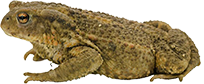
True toads belong to this group. The skin is dry and having warts. They have a pair of parotoid glands on the back of their heads. Lay eggs in strings
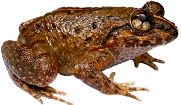
Known as fork-tongued frogs. Mostly aquatic. Toes webbed. Fingers slender and pointed.
Only three species in Sri Lanka. They have smooth moist skin, powerful hind limbs, webbed toes and distinct tympanum. Commonly known as true frogs.
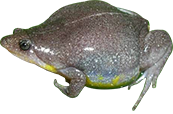
Known as narrow-mouthed frogs. Characteristic short, narrow, pointed snout with globose body. They become even more rounded when senses danger.
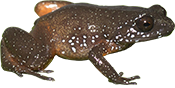
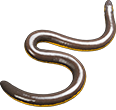
Only two species in Sri Lanka. They have a characteristic wrinkled body and two teeth like processes on the lower jaw. Inhabit in slow-moving streams and marshy habitats.
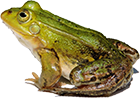
Only three species in Sri Lanka. They have smooth moist skin, powerful hind limbs, webbed toes and distinct tympanum. Commonly known as true frogs.
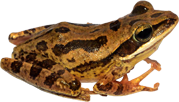
The Rhacophoridae are a family of frogs that occur in tropical sub-Saharan Africa, South India and Sri Lanka, Japan, northeastern India to eastern China, south through the Philippines and Greater Sundas, and Sulawesi. They are commonly known as shrub frogs, or more ambiguously as "moss frogs" or "bush frogs". Some Rhacophoridae are called "tree frogs". Among the most spectacular members of this family are numerous "flying frogs".
Although a few groups are primarily terrestrial, rhacophorids are predominantly arboreal treefrogs. Mating frogs, while in amplexus, hold on to a branch, and beat their legs to form a foam. The eggs are laid in the foam and covered with seminal fluid before the foam hardens into a protective casing. In some species, this is done in a large group. The foam is laid above a water source so the tadpoles fall into the water once they hatch.
